Sasha: the story of our most-loved engagement ring
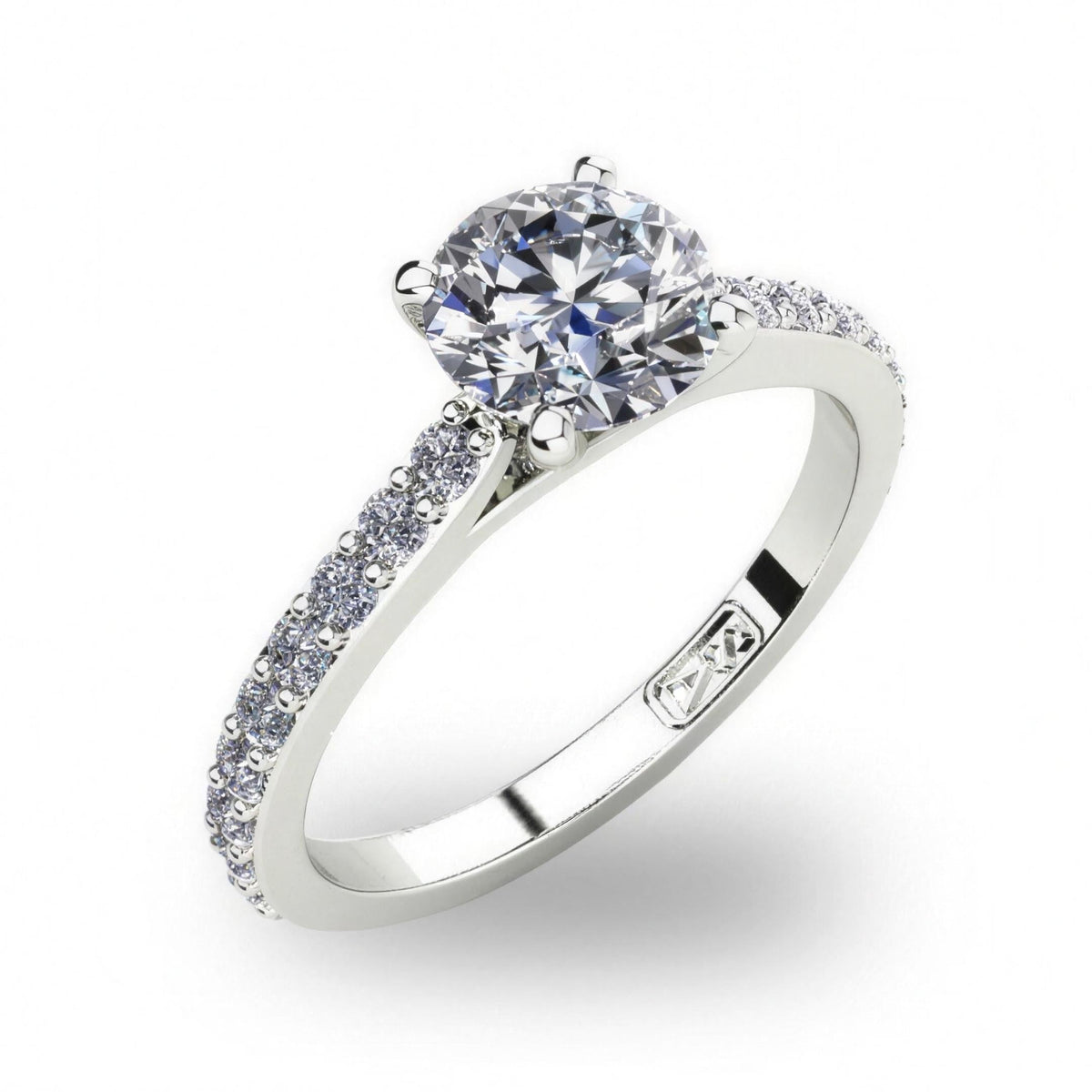
Sasha is a round brilliant diamond held in four claws, on a band set with a line of shared-prong diamonds. It has been the most requested design in our boutique for years, and the reason is simple: it is a solitaire with more light. It sits in the middle of our range, above the plain solitaires and below the halos, with a GIA-certified natural diamond at half a carat, three-quarters, or a full carat.
The design
There are two decisions in Sasha, and both are about showing more diamond and less metal.
The first is the four-claw head. Four claws hold a round brilliant securely while leaving more of the stone visible than six would. The claws are fine and rounded, so the diamond sits high enough to take light from the side as well as the top, and a wedding band can sit close beneath it.
The second is the band. Rather than a plain shank, the top of the band carries a row of small round diamonds set with shared prongs: each claw holds the edge of two neighbouring stones, so there is almost no metal between them and light passes through from the sides. From across a room Sasha reads as a solitaire. Up close, the band is alive. That is the balance people fall for.
The full range by metal and carat is on the Sasha product page.
Why it sells
We have thought about this, because Sasha has outsold every other design we make for a long time. A few honest reasons.
- It works at half a carat. The set band carries its own light, so a half-carat Sasha does not look like a small ring. Many couples choose Sasha at half a carat or three-quarters over a plain solitaire at the next carat up, for similar money, and prefer the result.
- It is not a trend. Four claws and a diamond band have been the backbone of engagement rings for a century. Sasha will look right in twenty years because it looked right in the last twenty.
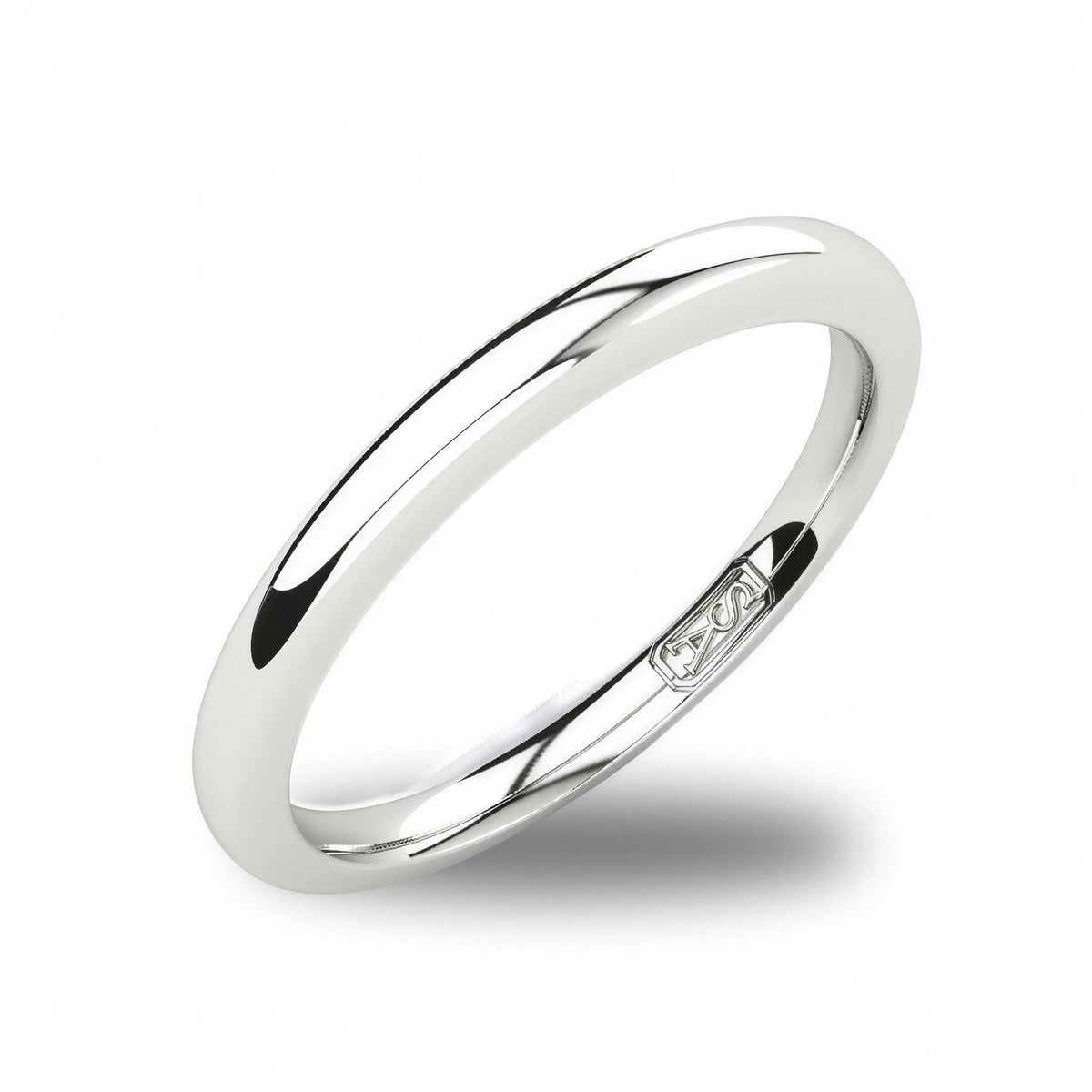
- It pairs easily. A plain band sits neatly against it; a matching diamond band turns the two into one piece. Our guide to pairing a wedding band covers the options.
- It suits most hands. The proportions are moderate: not a low, wide ring, not a tall one. It flatters without announcing itself.
How it wears
Shared-prong setting means less metal on the finger than a channel or bezel band, which is why it is so bright, and it is worth knowing what that means day to day. The small claws on the band are what hold the diamonds, so they should be checked once a year, which we do as part of the clean and check whenever you visit. Sasha is not fragile; it is simply a ring that rewards a glance now and then, like any diamond-set band. Our care and servicing guide covers the rest.
The head is open underneath, so the diamond is easy to clean at home with warm water, a drop of dish soap and a soft brush. Rings with closed backs collect more. Sasha does not.
What people change
Sasha is a starting point as often as it is a finished ring. The changes we make most:
- Six claws instead of four, for those who want the extra security or simply like the look.
- A yellow or rose gold band with a white gold or platinum head, so the centre stone stays white and the band carries warmth.
- A shorter or longer line of diamonds on the band. Some want the row to run further around; some want it to stop earlier so the ring is easier to resize later.
- A larger centre, beyond the one carat on the standard ladder. We quote those individually, against the stone we find for you.
- A lab-grown centre. The same setting with an IGI-certified lab-grown diamond costs considerably less at the same carat, and we quote it on request. The Sasha band also appears under an emerald cut in our lab-grown collection.
Any of these are a conversation, not a redesign. Sasha was drawn to be changed.
What it costs, in words
Sasha runs on our standard natural ladder of half a carat, three-quarters and one carat, in 9ct, 14ct or 18kt gold, or platinum. The feature diamond is F–G colour, VS2–SI1 clarity, with a GIA certificate, and the price is the finished ring with every diamond in it. The step from a plain solitaire to Sasha at the same carat is the cost of the diamonds on the band and the time to set them, which is modest against the centre stone. The step from three-quarters of a carat to a full carat is the larger one, as it is on every ring. The colour of the gold makes little or no difference to the price at the same purity, and the price of each metal, platinum included, is shown on the ring’s page. Sizes H to P are the same price, and sizes above P may carry a small additional charge for the extra metal, confirmed when we quote. Our guide to what moves the price of an engagement ring explains the rest, and the product page shows every configuration.
Where it sits in the collection
Sasha is the middle of our engagement collection: above the plain solitaires like Casey and Grace, below the halos like Jenna and the double halos like Emma and Faith. If you are choosing between a plain solitaire at three-quarters of a carat and Sasha at half a carat, come and try both on. The answer is usually obvious within a minute, and it is not always the one you expect.
Made to order
Every Sasha is made to order, designed in our Adelaide boutique and Australian made, and takes four to six weeks. It comes with the GIA certificate for your diamond, a complimentary first resize, and a clean and check whenever you visit. If you want it changed, tell us; if you want it exactly as it is, that is the most common answer of all.
Book a private viewing to try Sasha on with a real stone in it, next to the designs on either side of it.